



What is Anterior Head Syndrome?
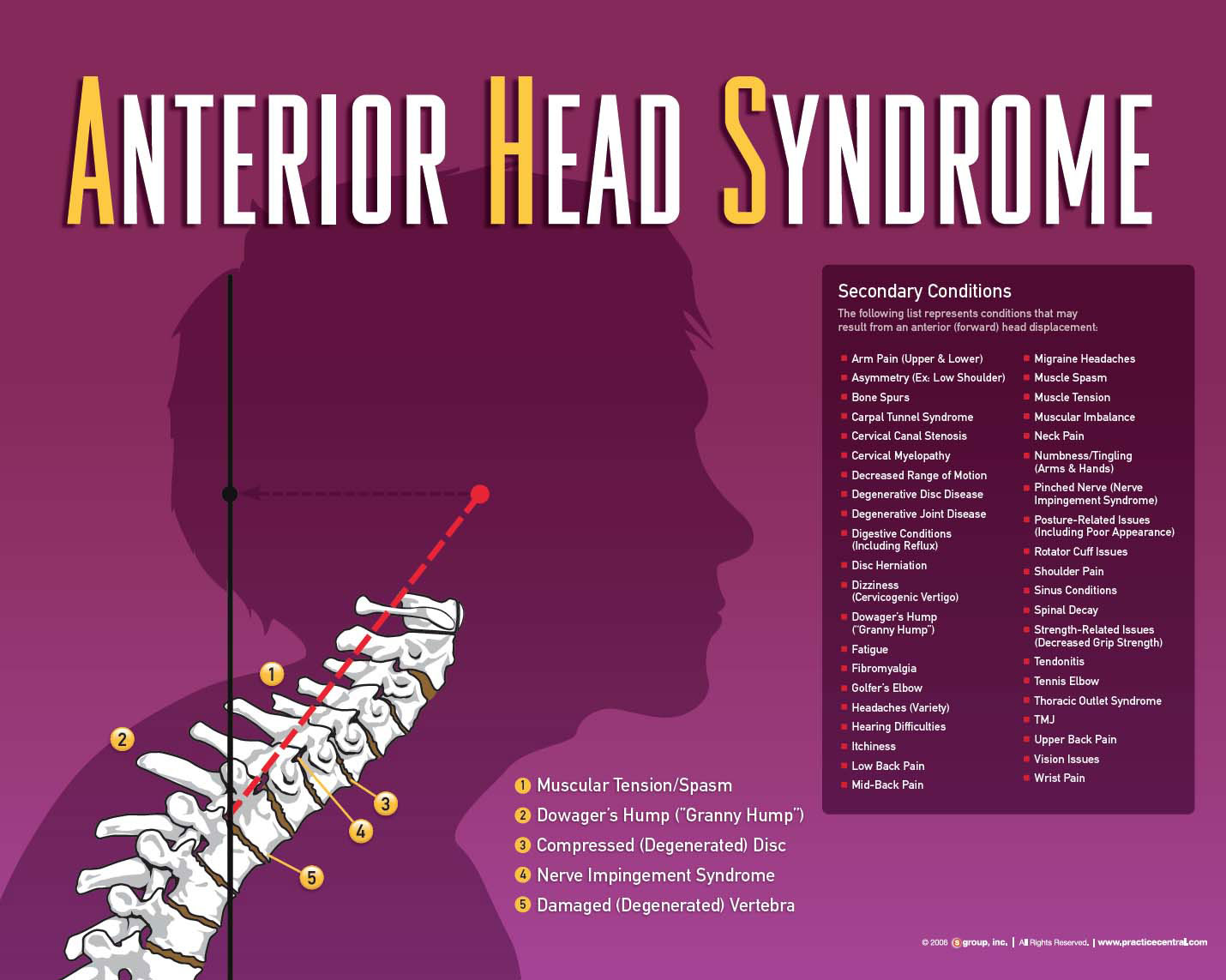
Have you ever been told that you have a reverse cervical lordosis, reversed neck curve or tech neck? Well actually this is a condition called "Anterior Head Syndrome (AHS).”
The cervical spine (neck) is designed with a gentle forward curve known as a lordosis. This natural curve is not an accident—it serves an important purpose. It helps support the weight of the head, distributes stress throughout the spine, absorbs shock during movement, and allows the nervous system to function efficiently. When that curve begins to flatten or reverse, the structure of the spine changes, and those changes can affect how the body performs.
What Is Anterior Head Syndrome?
Anterior Head Syndrome occurs when the normal C-shaped curve of the neck straightens significantly or bends in the opposite direction. In some cases, this condition develops gradually over time. In others, it may result from trauma, repetitive stress, poor posture, or chronic mechanical strain on the neck.
Modern lifestyles often contribute to this problem. Hours spent looking down at phones, working on computers, and maintaining forward-head posture can place abnormal stress on the structures of the cervical spine. Over time, these stresses may contribute to changes in spinal alignment.
Structure Dictates Function
One of the foundational principles of chiropractic care is that structure influences function.
Think of a bridge. If the supports of the bridge begin to shift out of position, the bridge may still stand, but it won't distribute forces as efficiently. Over time, excess stress develops in areas that were never designed to handle it.
The human body works the same way.
The neck must support a head that weighs approximately 10 to 12 pounds. A healthy cervical curve helps distribute that load across the joints, muscles, discs, and ligaments of the neck. When that curve is lost or reversed, the body's mechanics change. The muscles may be forced to work harder, joints may experience abnormal stress, and movement patterns can become less efficient.
This is why many people with altered cervical curves experience symptoms such as:
- Neck pain and stiffness
- Frequent headaches
- Reduced range of motion
- Muscle tension in the shoulders and upper back
- Fatigue during prolonged sitting or computer work
- Discomfort during physical activity
While not everyone with a reversed cervical curve experiences symptoms, structural changes can alter how forces move through the spine and surrounding tissues.
Performance Starts with Proper Alignment
Whether you're an athlete, a busy professional, or simply someone who wants to stay active, your body's performance depends on efficient movement.
When the spine maintains healthy alignment, muscles can work more effectively, joints can move more freely, and the body can better handle the stresses of daily life. Conversely, abnormal spinal mechanics can contribute to compensations throughout the entire kinetic chain.
A reversed cervical curve doesn't just affect the neck. Because the spine functions as a connected system, changes in one area can influence posture and movement elsewhere in the body. The result may be increased stress on the shoulders, upper back, and even the lower spine.
Can Anterior Head Syndrome Be Improved?
Every patient is unique, and the severity, cause, and duration of AHS all influence the potential for improvement.
Research has explored structural rehabilitation approaches aimed at improving cervical alignment and forward-head posture through combinations of corrective exercises and chiropractic care. While outcomes vary from patient to patient, the goal is often to address the underlying structural issue rather than simply managing symptoms.
A thorough examination, including posture assessment and appropriate imaging when indicated, can help determine the extent of the problem and guide a personalized care plan.
Live Near Ann Arbor and Struggling with Neck Pain?
If you've been diagnosed with Anterior Head Syndrome or have been struggling with chronic neck discomfort, headaches, or postural challenges, a comprehensive chiropractic evaluation can help determine whether structural changes in your neck may be contributing to the problem. Dr. Gessert can help treat a myriad of issues related to neck pain in Ann Arbor, so if you’re unsure whether or not a chiropractor could help, give us a call at 734-221-0362 or submit a contact form here!